One machine, every joint width
From a 1 mm wall joint to an 8 mm floor joint, the step adjuster covers the range without changing machines — or guessing how deep you went last time.
One machine for the slowest, dirtiest part of a tiling job: taking out old grout and opening tile joints. A 20 V brushless motor drives the blade, the depth is set on a scale instead of guessed, a roller base holds the line, and the dust leaves through a shroud into your vacuum.
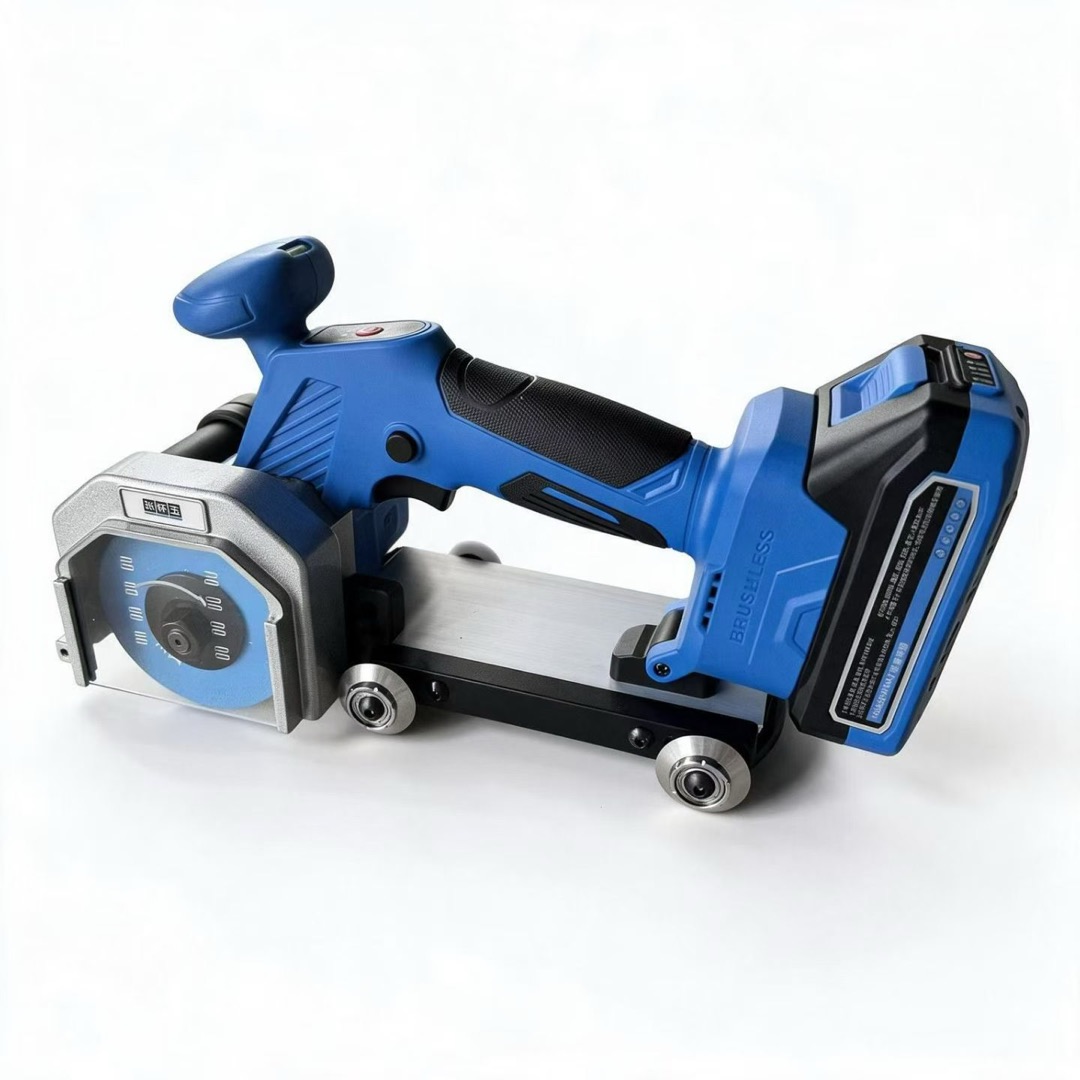
Built for the person holding it all day — one hand on the grip, the other free to hold a vacuum hose or a bucket.
Every detail below exists because the alternative costs a re-visit: a blade that wanders, a depth you cannot repeat, or dust through a client's flat.
From a 1 mm wall joint to an 8 mm floor joint, the step adjuster covers the range without changing machines — or guessing how deep you went last time.
The roller base rides the tile surface and holds the blade in the joint. On long runs this is the difference between a clean channel and a chewed edge.
A window in the guard shows the blade in the joint while it cuts. Corrections happen in the first 20 cm, not at the end of the wall.
The shroud covers the cutting point and the elbow port takes a vacuum hose. In a furnished flat, this is what keeps the job on schedule.
Brushless motor, swappable packs, and a grip sized to be held rather than pinched. A 4.0 Ah pack keeps a crew running between swaps.
Battery, charger, vacuum elbow, spanners and hex wrench all in the case — the kit is usable the day it lands, not after a second order.
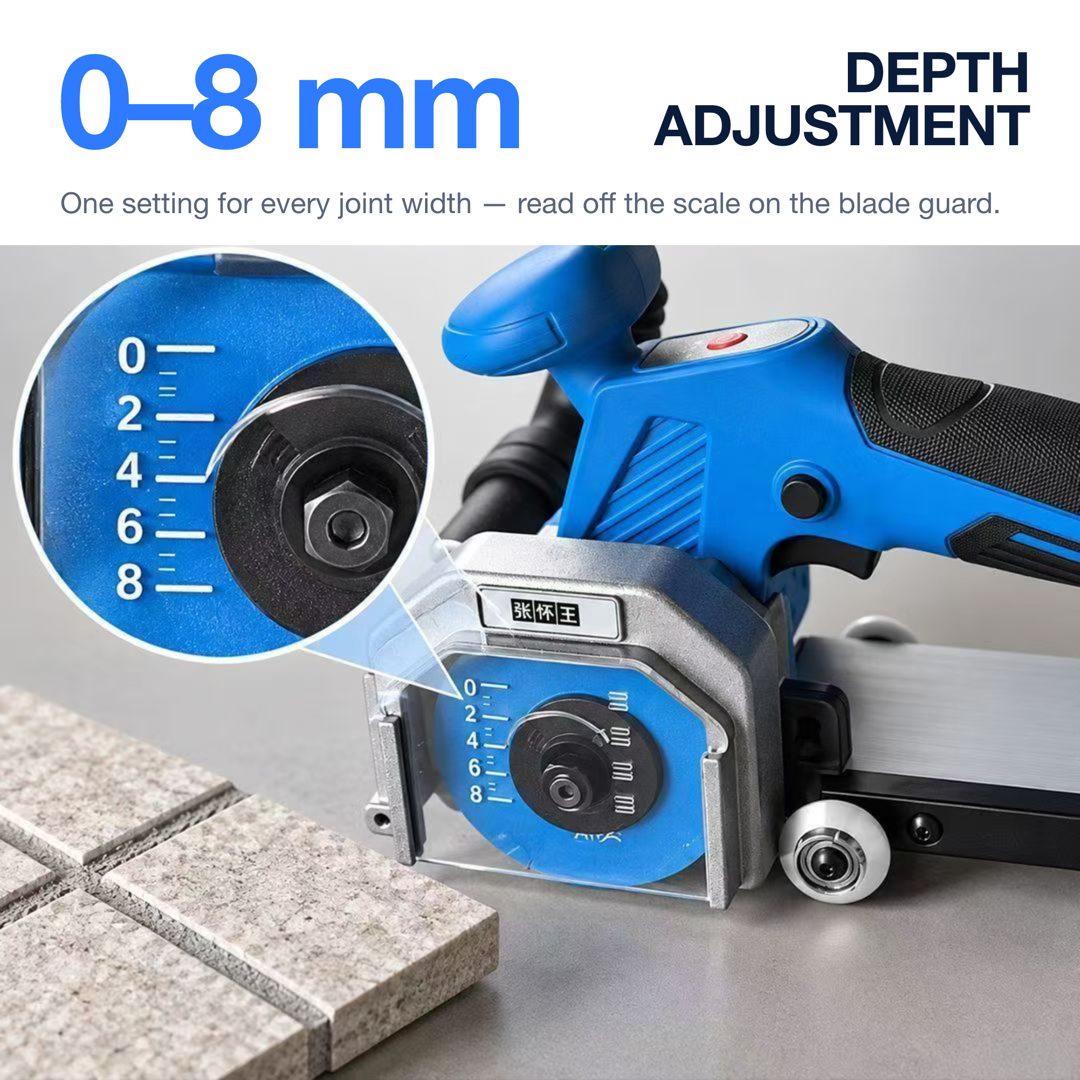
The single most common cause of a ruined joint is cutting too deep — into the waterproofing or into the tile bed. This machine removes the judgement call.
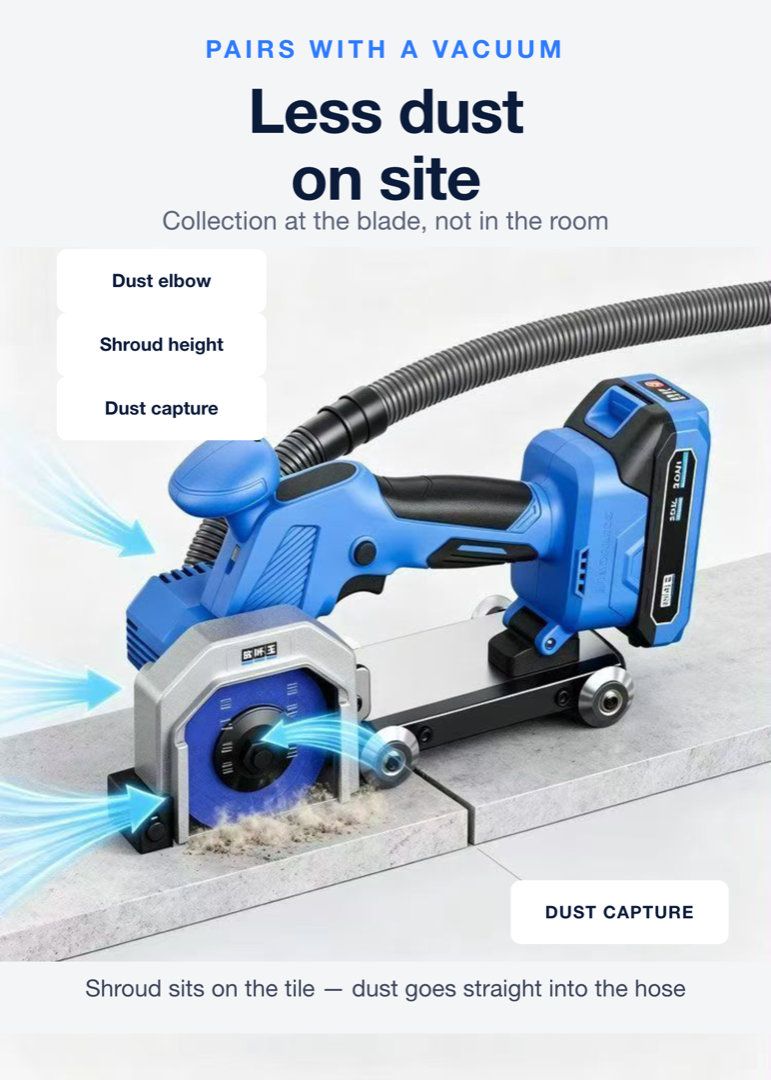
Grout dust is fine, airborne and gets everywhere. Working in an occupied home without extraction usually means covering furniture you should not have to cover.
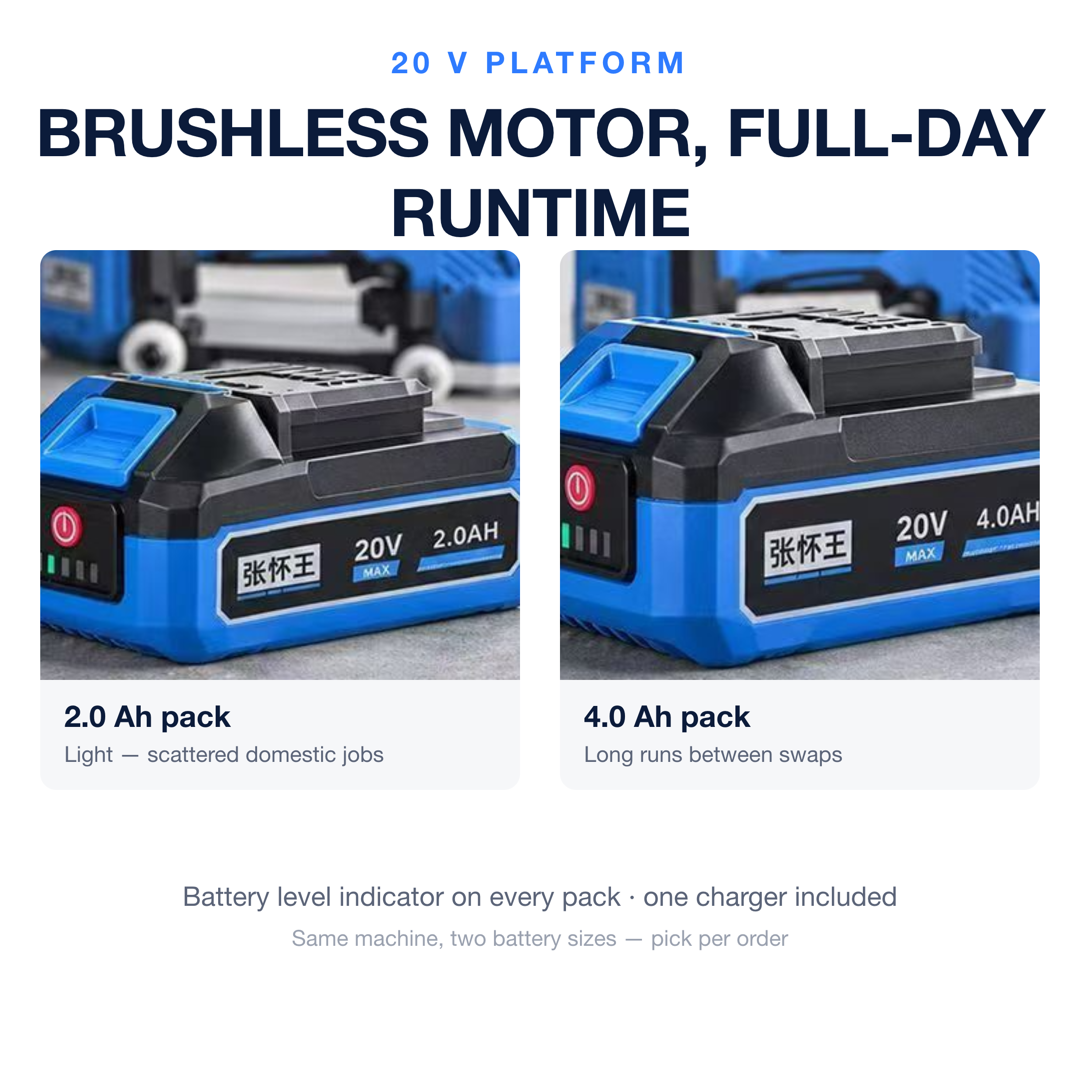
Battery choice is a working-pattern question, not a specification question. Both packs fit the same tool; the difference is how long you want to carry it and how often you want to swap.
As marked on the manufacturer's packaging. Configuration, plug standard and kit contents are confirmed in writing before any order ships.
| Item | Published value |
|---|---|
| Product | Cordless grout removal machine |
| Motor | Brushless |
| Battery platform | 20 V MAX lithium-ion |
| Battery options | 2.0 Ah — light, occasional work · 4.0 Ah — continuous runs |
| Depth adjustment | 0–8 mm, stepped scale on the blade guard |
| Blade visibility | Adjustable viewing window over the blade |
| Guidance | Roller base with presser plate |
| Dust extraction | Shroud + elbow port for vacuum connection |
| Grip | Single-hand body, low centre of gravity |
| Kit contents | 1 × battery, 1 × charger, vacuum elbow ×1, spanners ×2, hex wrench ×1, plastic carry case ×1 |
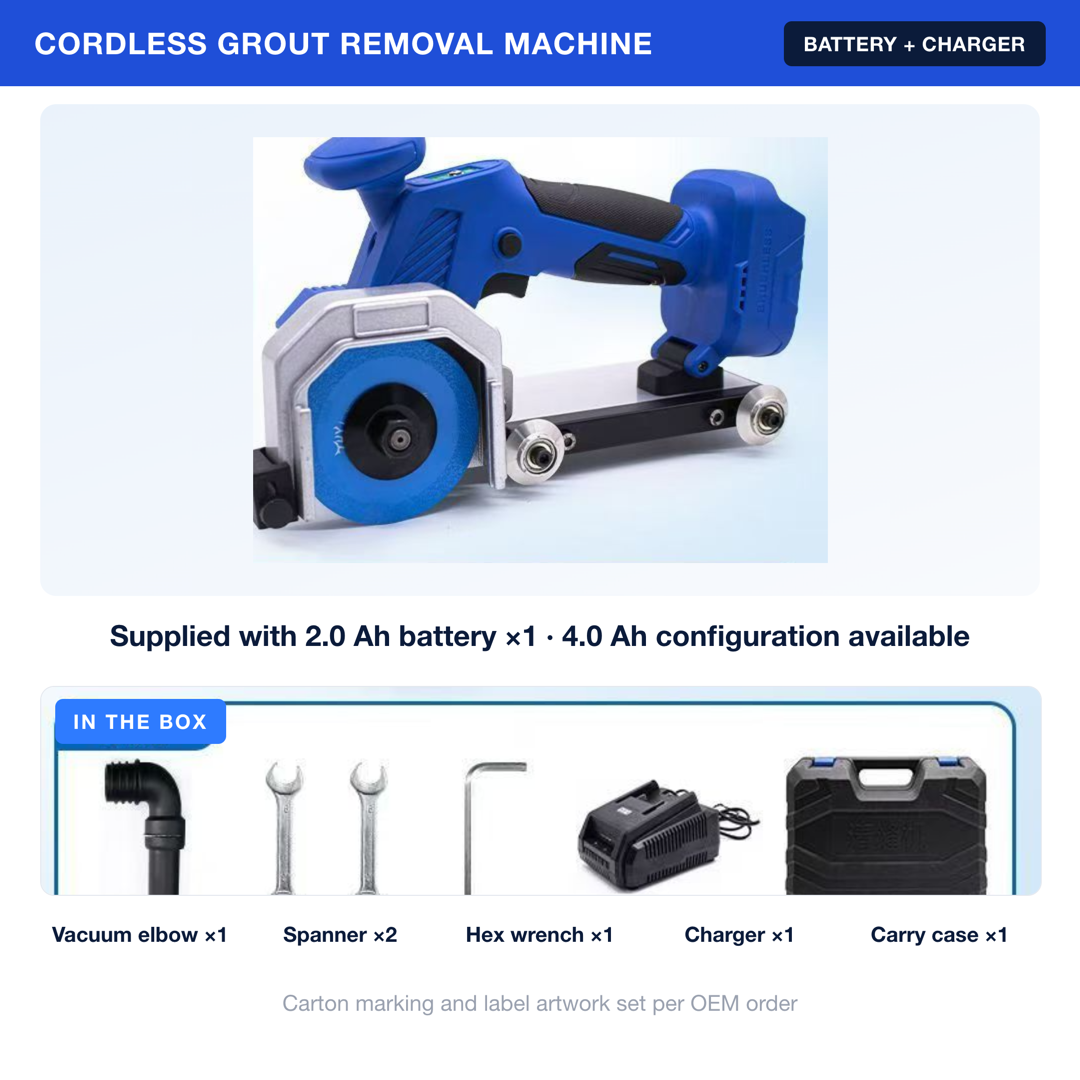
A complete kit — one battery, one charger, and the fittings needed on the first day.
Cement-based joints, failed or crumbling grout, and joints that need opening up before new grout goes in. Cutting depth is adjustable from 0 to 8 mm on a stepped scale, so the same machine handles narrow wall joints and deep floor joints.
For epoxy joints, send us the product you are working against and we will confirm the blade and the number of passes before you order — hardness varies a lot between epoxy grouts.
The blade is held by a presser plate, guided by a roller base, and the cutting depth is set rather than estimated — which is what keeps the cut centred in the joint instead of climbing the tile edge.
Blade condition and technique still matter. Always run a test cut on an offcut, or in a corner that will be covered, before working across a visible floor.
Yes. The shroud connects to a vacuum through the elbow port supplied in the kit. Tell us your hose diameter when you order and we will confirm the fit, or supply the matching adapter with the shipment.
2.0 Ah keeps the machine light for occasional domestic work and for moving between rooms. 4.0 Ah is for crews running the machine most of the day, where fewer battery swaps matter more than the weight in your hand. Both packs fit the same machine, and spares can be ordered separately.
Runtime depends on joint hardness, cutting depth and how much of the run is under load — a soft cement joint at 3 mm and a hard joint at 8 mm are not comparable. That is why we do not publish a single runtime figure. Tell us your joint type and depth and we will advise how many packs to carry per crew.
Yes. Carton marking, label artwork, instruction sheet language and the plug standard for your market can all be set for private-label orders. Minimum quantities and lead time are confirmed in writing against the artwork — see OEM & private label.
Tell us the battery size, the plug standard for your market, your vacuum hose diameter and the quantity. Sample orders are welcome before committing to container volume.